Sophie AI
An autonomous agent that sees.
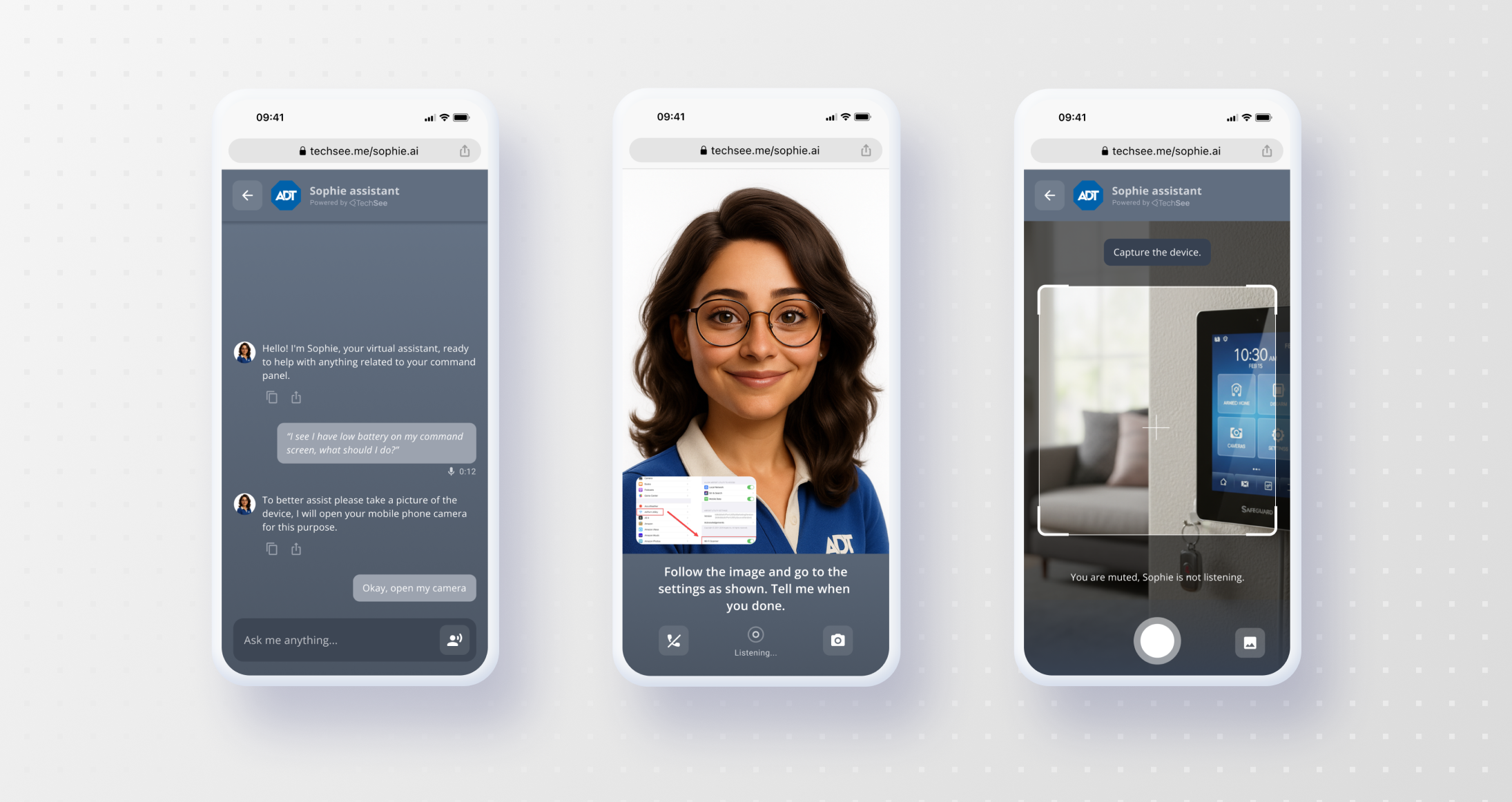
Product Design Manager. A hands-on role, and for most of the platform’s life I was the only designer on it
Sole designer for most of the platform’s life. A junior designer I recruited for a period; PM, data and ML, and backend throughout
Three surfaces: customer agent, agent assist, Sophie Studio. UI systemisation on TechSee’s MUI based design system, prototyping, workshops, usability testing
Run by ADT across millions of American homes, 2.6M+ sessions
TechSee, 2022 to 2026
A customer looks at their security panel and sees an error they do not understand. They call. An agent walks them through it, the same walkthrough they did yesterday and will do again tomorrow. And if it is not resolved, the customer will call tomorrow and explain everything from the start.
Sophie AI takes that call. Not to replace the agent, but to free them for the one that actually needs a real human.
Three surfaces, three very different users, one AI underneath.
Scope came from ADT’s own
knowledge base
ADT already had a decision tree their agents walked by hand. It told us exactly which problems recurred often enough to automate.
We made it conversational. And because Sophie could see, it stopped being linear. Image recognition let it skip branches an agent would have had to ask through.
Same knowledge base. Entered at the right depth instead of from the top.
Three surfaces, three users
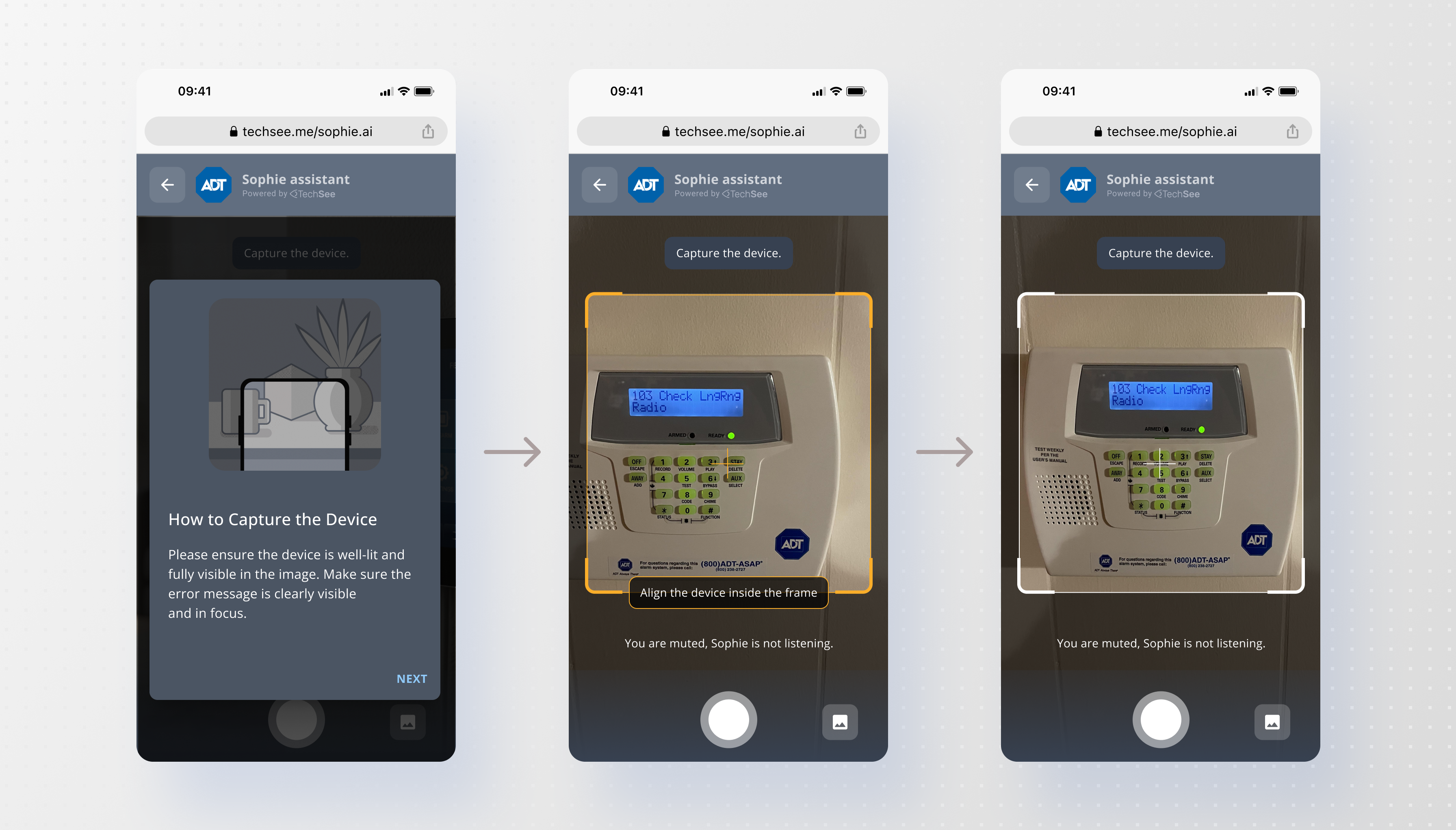

In a hallway, holding a phone, not a technician. Testing showed people could not frame the device: too far, too close, wrong angle, and the model failed silently. I added live feedback when the frame was too dark or blurred, and an explanatory screen before capture.
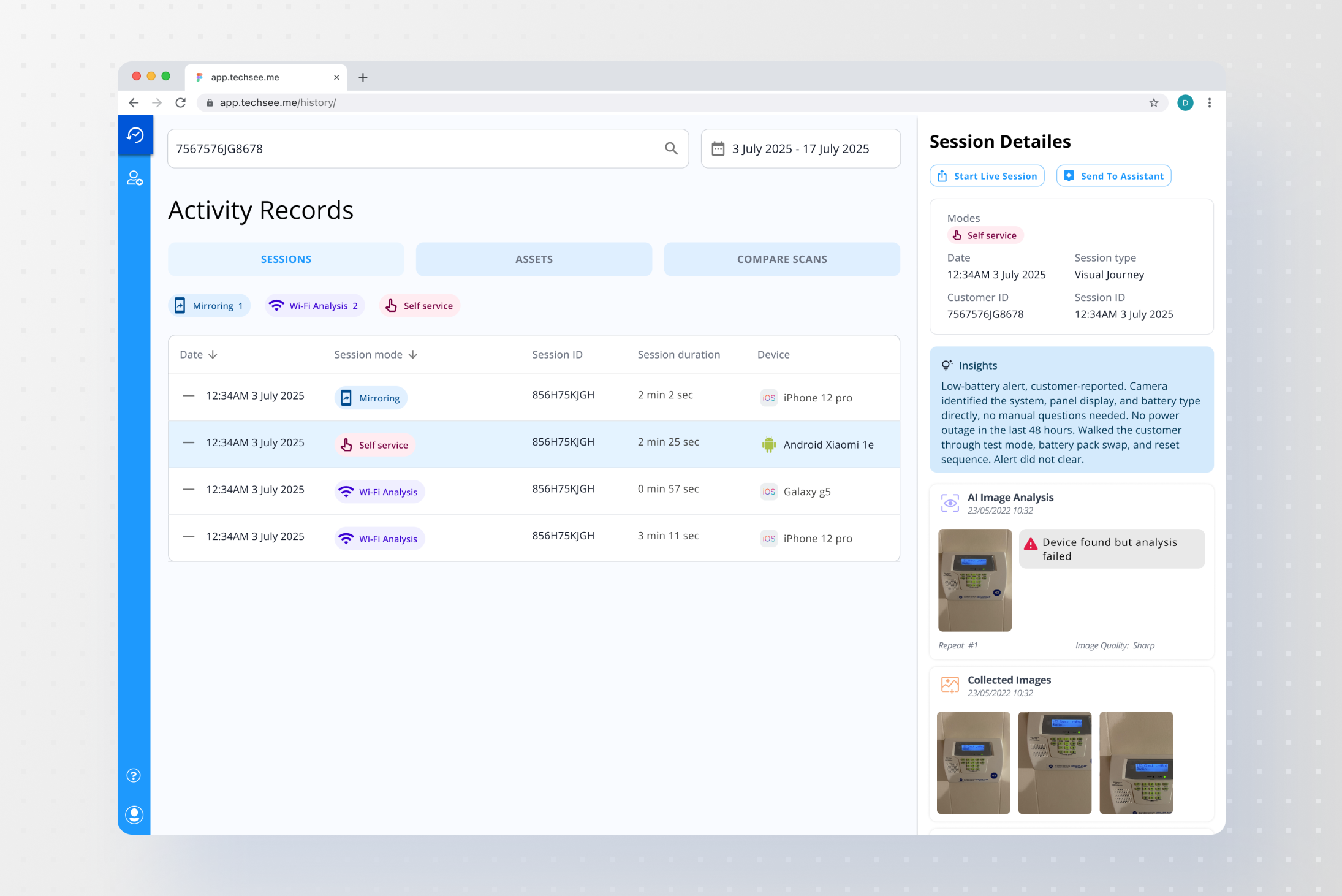
Before making contact, not during it. Every self-service session is logged: mode, duration, device, the same AI-written précis and photos a live escalation would carry. Search by session or date and see exactly where the customer got stuck, before the phone even rings.
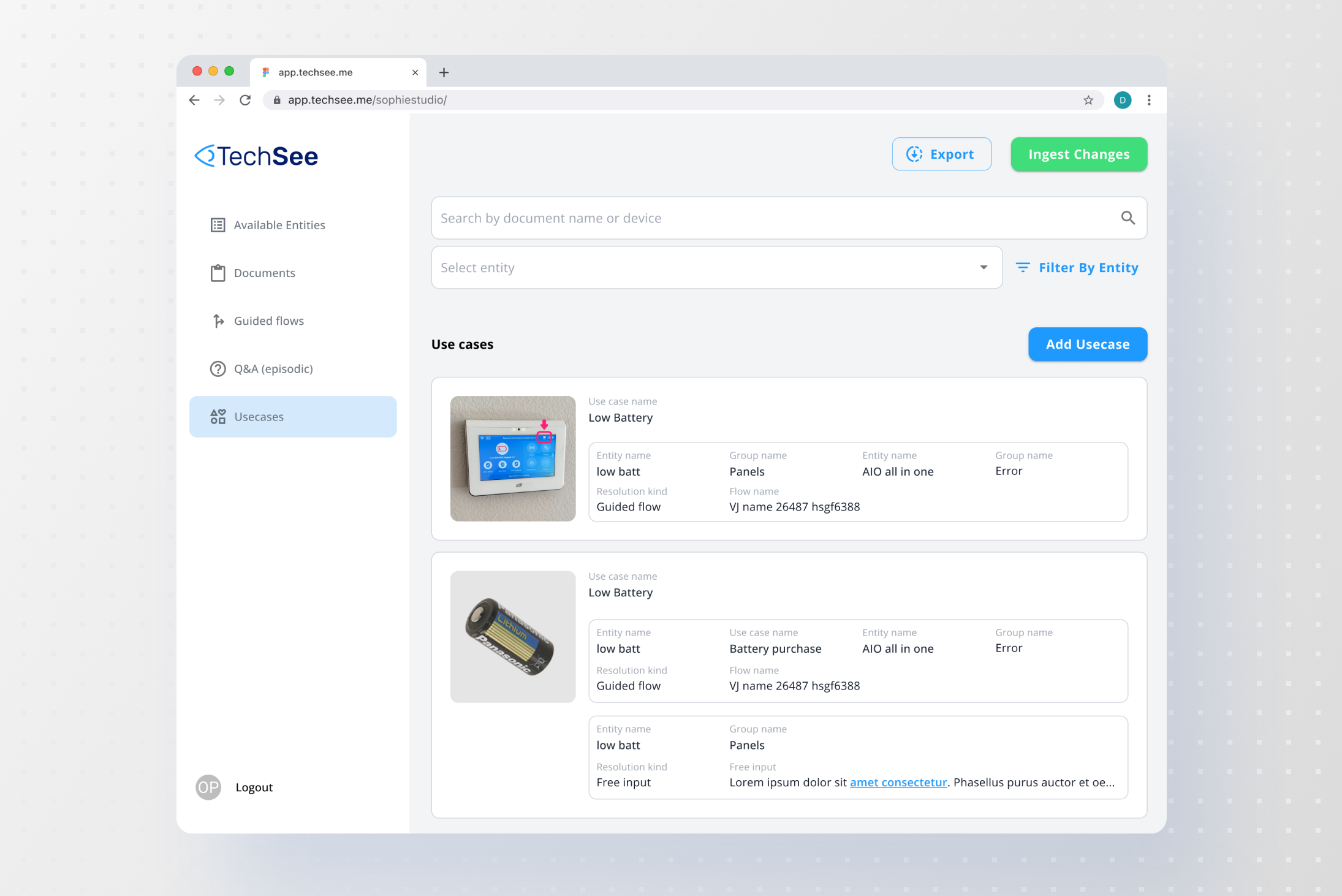
Authors what Sophie knows, in Sophie Studio. Teams uploaded their own knowledge base and flow trees for Sophie to learn from and run autonomously. The documentation they already had became the agent’s training material.
The escalation was the hard part
Every AI agent eventually gives up. The default failure is familiar: the human picks up cold, the customer explains everything again, and every second the AI saved gets spent back with interest.
So escalation was a designed flow, not an error state. The agent inherited everything: the images Sophie captured, the device it identified, where in the flow it stopped, and the path the customer had already taken to get there.
A text summary tells an agent what was said. A visual one tells them what is actually in the hallway.
What happened
ADT ran it across millions of American homes.
These are platform results, not my personal metrics. I designed every surface that produced them.
Source: TechSeeWhat I would do differently
We did test. Vodafone ran sessions on their side, and internally we pulled people at random in the WeWork lobby and watched them attempt the flow cold. That is where the capture problems surfaced. What we never had was the real user in the real place, in bad light, at the moment they would otherwise have called. I pushed for that access repeatedly and rarely got it; enterprise customers guard their users.
What I would do differently is not push harder. It is name it in writing as a product risk, early, so the trade off became a decision the business made rather than one I absorbed alone.